Why Manual WhatsApp Bookings Fail as Your Business Grows (And What to Do Instead)
Manual WhatsApp booking works when you have 5 customers a day. But at 20+ bookings? It's chaos. Discover why 67% of Indian service businesses lose revenue to WhatsApp coordination—and the simple fix that saved one salon ₹8L annually.
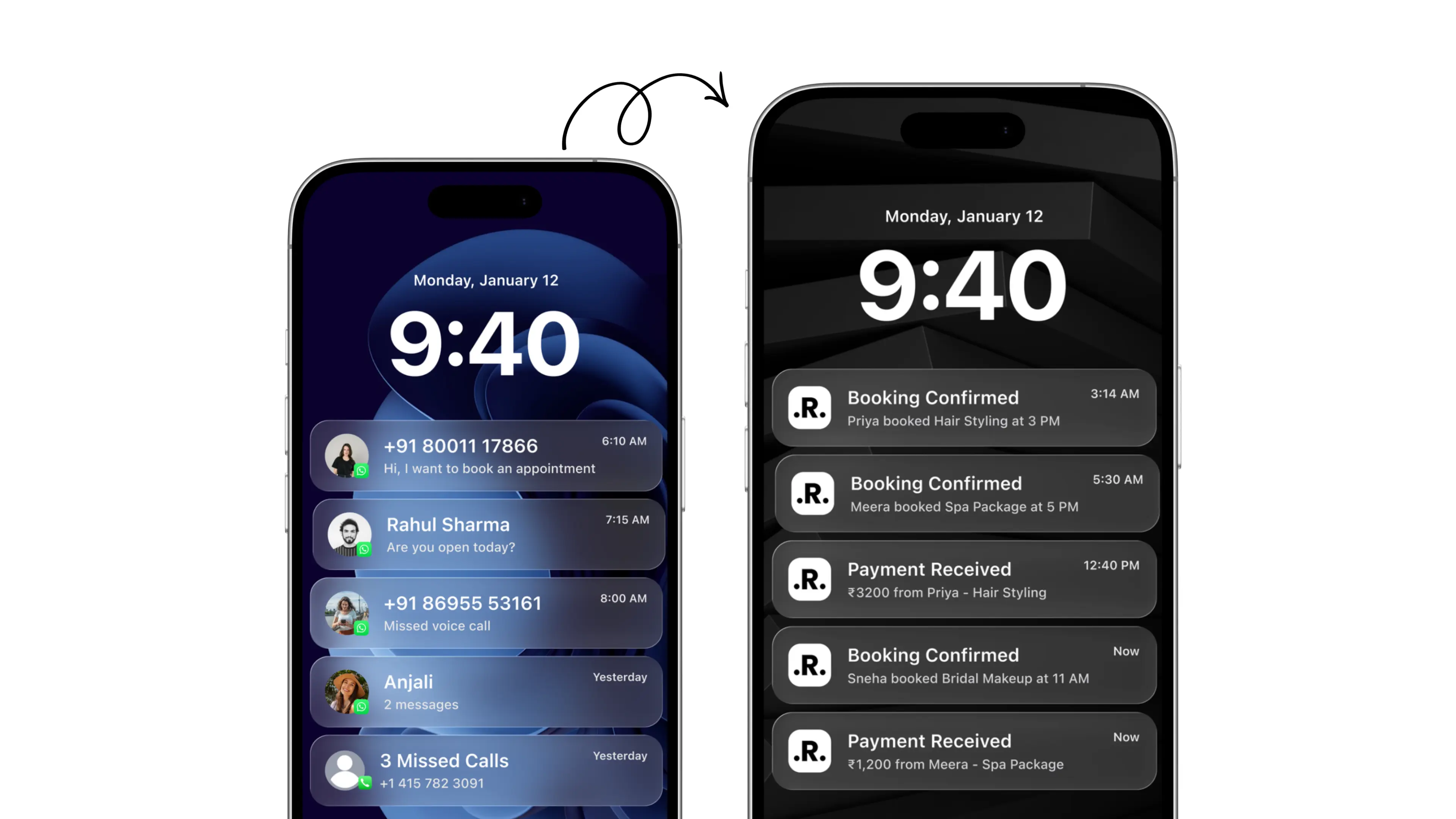
You started with WhatsApp because it made sense. Everyone in India uses it. Your customers are comfortable with it. And when you had 3-4 bookings a day, it was manageable.
But now?
Now you're waking up to 47 unread messages. Someone's asking if you're free "tomorrow" (which tomorrow?). Another wants to reschedule for the third time. Five people sent "?" because you didn't reply fast enough. And somewhere in this chaos, a new customer gave up and booked with your competitor who had a "Book Now" button.
WhatsApp booking doesn't scale. And it's costing you more than you think.
The Breaking Point
Most service businesses hit the wall around 15-20 daily bookings. That's when WhatsApp coordination stops being convenient and starts becoming expensive.
Here's what happens:
You're mid-service with a client. Your phone buzzes. It's a booking inquiry. You can't respond now—your hands are literally full. An hour later, you remember to check. The customer already booked elsewhere.
That's ₹1,500 gone. Multiply that by 10-15 times per month. You're losing ₹15,000-₹22,500 monthly just from delayed responses.
But it gets worse.
The Real Cost of WhatsApp Bookings
1. Message Overload = Missed Opportunities
WhatsApp groups all messages together. A booking request from a new customer sits between your family chat and a meme from your friend. Important messages get buried.
Studies show that Indian service businesses miss 35-40% of WhatsApp booking inquiries during business hours simply because they're busy serving existing customers.
2. No Automatic Reminders = 30-40% No-Shows
You manually message customers the day before: "Hi, reminder about your appointment tomorrow at 4 PM."
But you forget sometimes. Or you're busy. Or the message doesn't go through. The customer forgets. They don't show up. You lose ₹800-₹2,000.
Without automated reminders, no-show rates stay dangerously high at 30-40%.
3. Double-Booking Disasters
It's Tuesday afternoon. You confirm a 5 PM booking via WhatsApp to Priya. Later, you forget and confirm the same 5 PM slot to Rahul via call. Both show up. One customer is furious.
When bookings live across WhatsApp, calls, and a paper register, double-bookings are inevitable. And they destroy your reputation.
4. Zero Payment Tracking
"Did you receive my payment?" "I sent it yesterday." "Let me check..."
You're scrolling through hundreds of WhatsApp transactions, trying to match names to payment screenshots. Half your Sunday is spent reconciling payments.
5. After-Hours = Lost Revenue
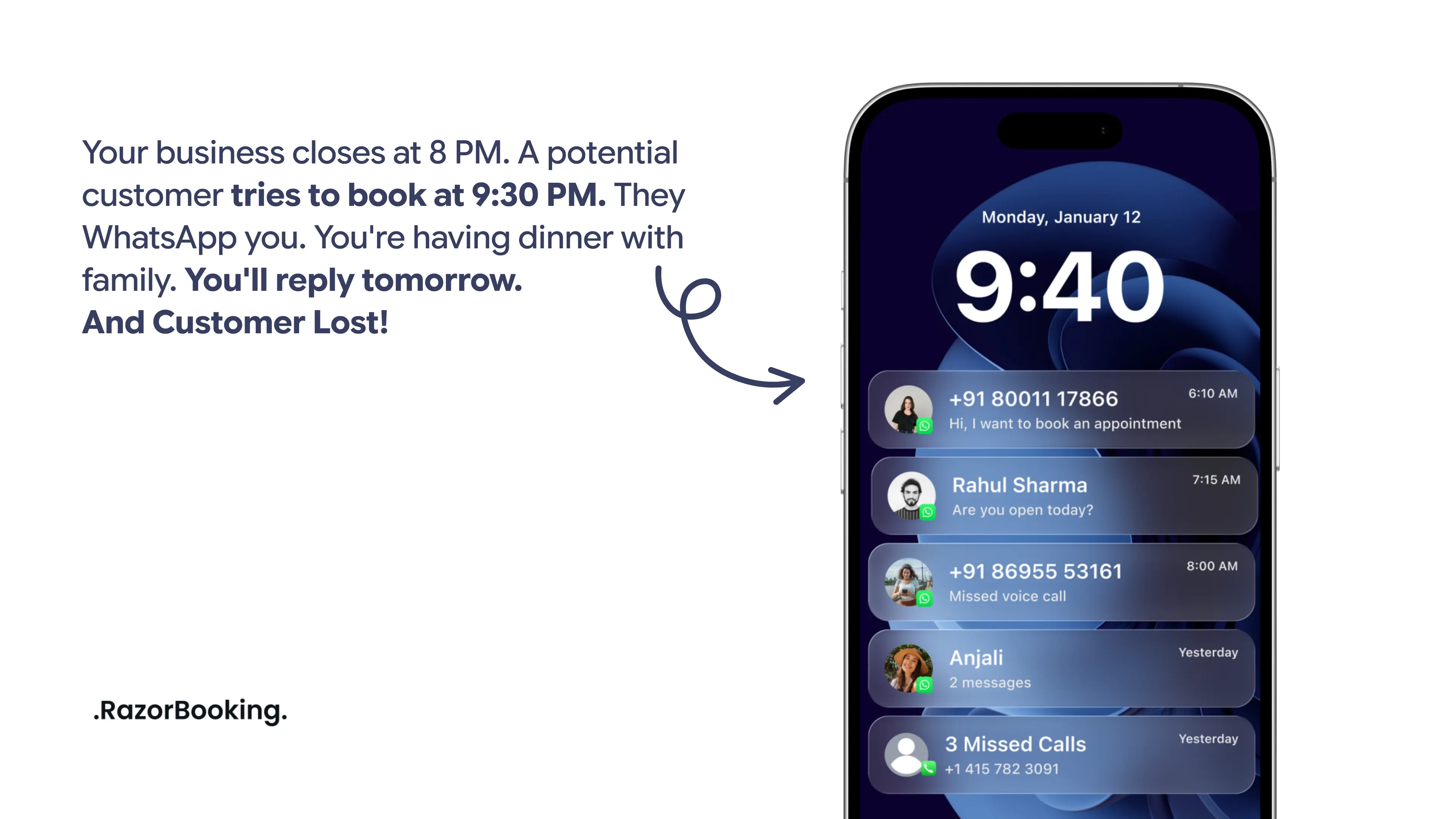
Your business closes at 8 PM. A potential customer tries to book at 9:30 PM. They WhatsApp you. You're having dinner with family. You'll reply tomorrow.
But tomorrow they've already booked with someone who accepts bookings 24/7. Indian customers book when it's convenient for them, not you.
Real Business Impact: The Numbers
Case Study: Meera's Spa, Mumbai
Meera ran her spa bookings through WhatsApp for 2 years. Here's what it was costing her:
Monthly Reality:
180 bookings per month
Spent 2.5 hours daily on WhatsApp coordination (75 hours/month)
Missed ~25 booking inquiries (₹37,500 lost revenue)
38% no-show rate without reminders (₹68,400 lost)
3-4 double-bookings monthly (angry customers)
Payment reconciliation: 4 hours weekly
Annual Cost:
Lost revenue: ₹12,70,800
Time wasted: 900 hours (that's 112 full workdays!)
Reputation damage: Immeasurable
After switching to automated booking: Revenue increased 34% in 6 months, no-shows dropped to 7%, and she got 75 hours per month back.
Why Smart Businesses Are Switching
The Modern Customer Expectation
67% of Indian customers under 40 now expect businesses to have online booking. They want to:
See available time slots in real-time
Book instantly without waiting for confirmation
Reschedule themselves if plans change
Receive automatic reminders
If you're still making them wait for WhatsApp replies, you're creating friction. And friction kills conversions.
Your Competitors Are Already Moving
That salon down the street? The one that opened 6 months ago but already has more bookings than you? Check their Instagram bio. They have a "Book Now" link.
Customers see two options:
Your salon: "WhatsApp us to book" (wait for reply, coordination back-and-forth)
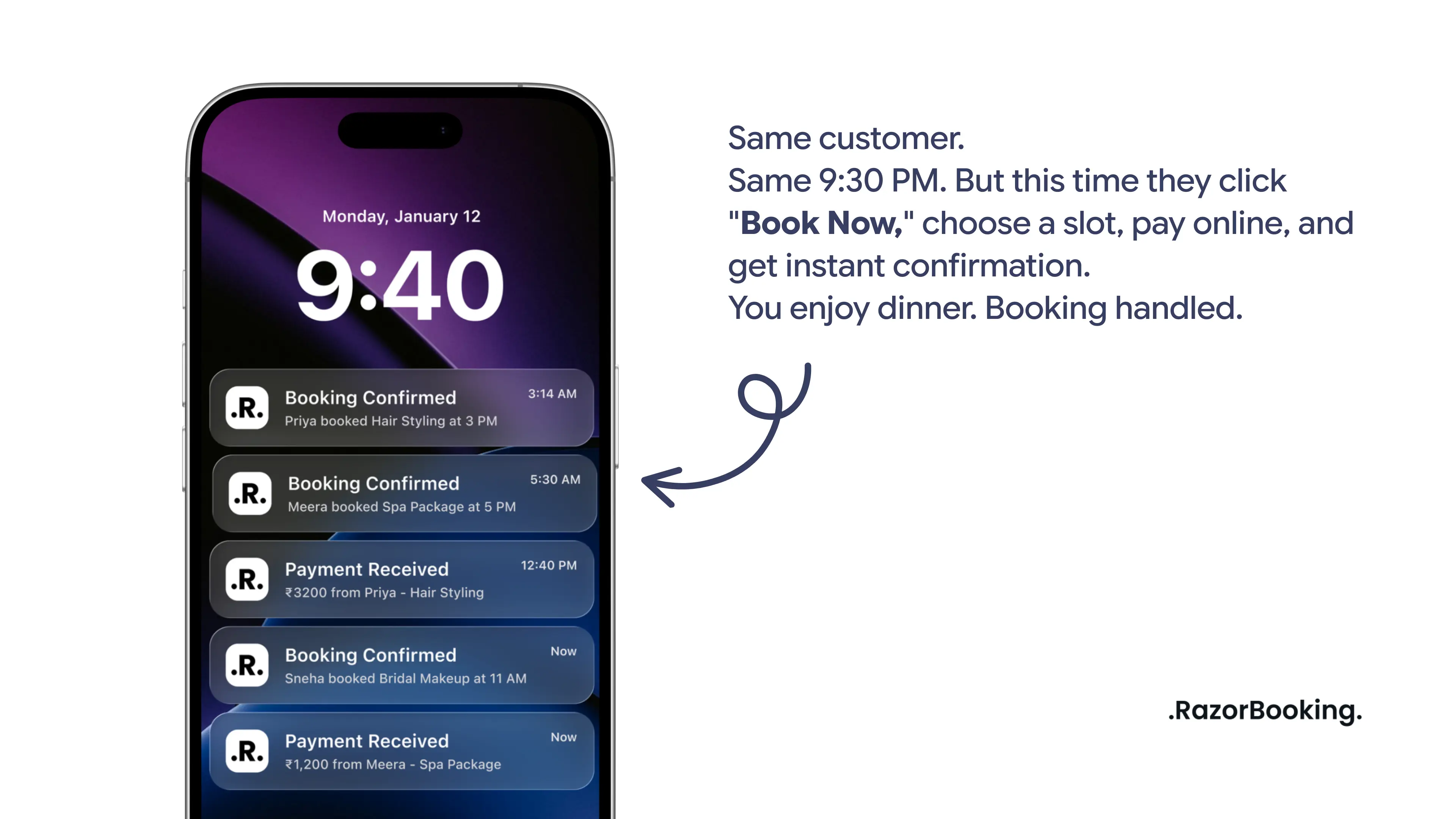
Their salon: "Book Now" (instant confirmation, pick any available slot)
Which one would you choose?
The Breaking Point Signals
You know it's time to move away from WhatsApp when:
✗ You spend 2+ hours daily just coordinating bookings
✗ You're missing 10+ inquiries per week
✗ Customers complain about slow response times
✗ No-show rate is above 25%
✗ You've had multiple double-booking situations
✗ Sunday afternoons are spent matching payments to customers
✗ You can't take a day off without booking chaos
✗ After-hours inquiries go unanswered
✗ You're considering hiring someone just to manage WhatsApp
If you checked 3 or more, WhatsApp is actively costing you money.
What to Do Instead
The Alternative: Automated Booking Systems
Here's what changes when you switch to proper booking software:
Instead of WhatsApp chaos:
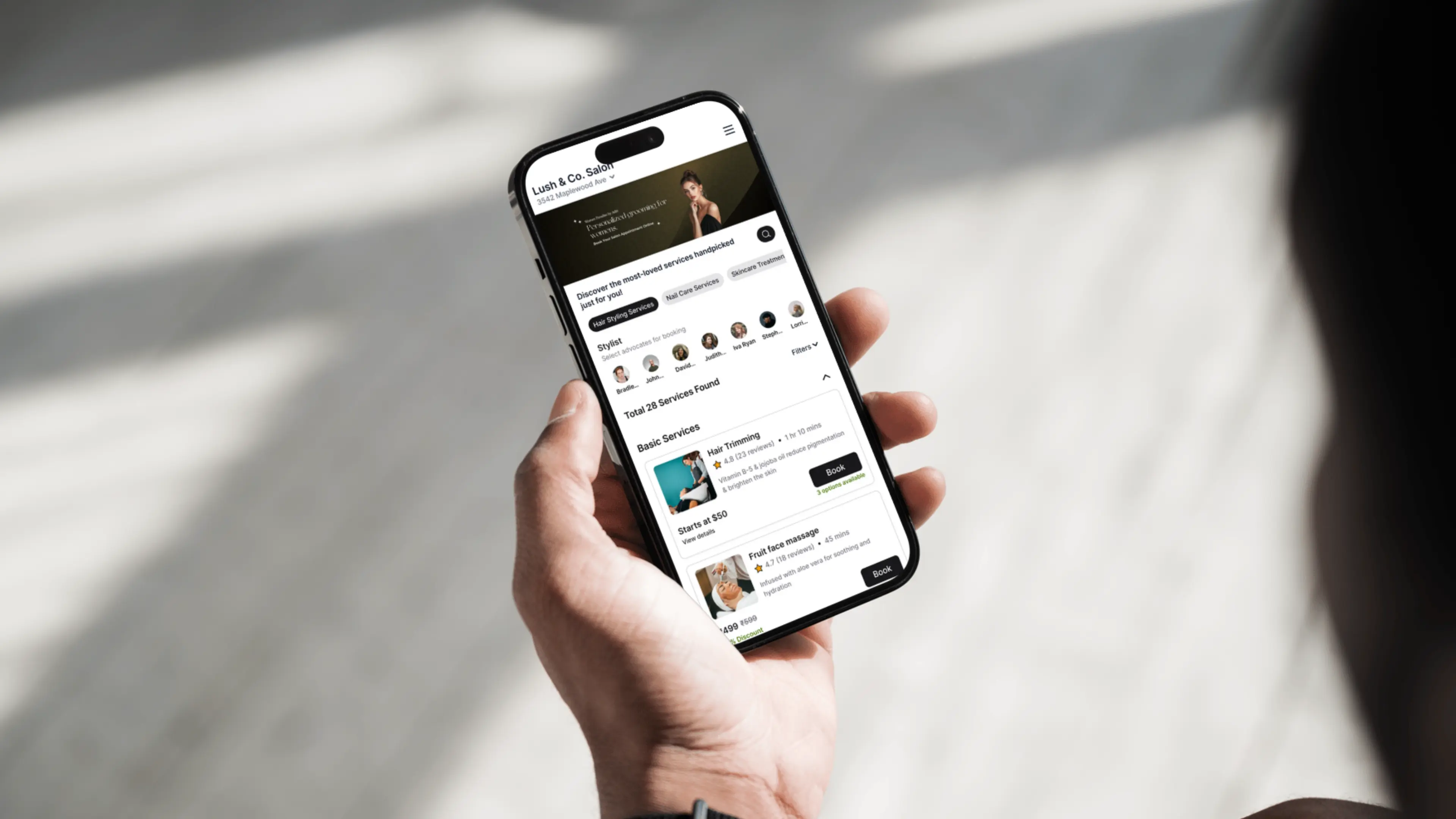
Customer visits your booking page
Sees real-time availability
Books their preferred slot
Pays online (optional)
Gets instant confirmation
Meanwhile, you:
Receive automatic notification
Calendar updates itself
Customer gets automated reminders
Zero manual coordination needed
The Business Impact:
Before (WhatsApp) | After (Automated Booking): |
|---|---|
2.5 hours daily on coordination | 20 minutes daily managing bookings |
50% missed inquiries | 0% missed inquiries (24/7 booking) |
38% no-show rate | 7% no-show rate (automated reminders) |
Manual payment tracking | Automatic payment tracking |
Constant interruptions | Work without interruptions |
But What About WhatsApp?
You don't have to abandon WhatsApp completely. The smart approach:
Keep WhatsApp for | Use booking software for |
|---|---|
Customer service questions | Appointment scheduling |
Quick updates | Payment processing |
Building relationships | Automated reminders |
Promotional messages | Calendar management |
Best of both worlds. The booking software even sends confirmations and reminders via WhatsApp—so customers still get their familiar WhatsApp messages, but you're not manually sending each one.
Common Concerns Addressed
"My customers are used to WhatsApp. They won't adapt."
Your customers use WhatsApp because that's what you offered. But 82% of Indian smartphone users also use apps like Swiggy, Zomato, and BookMyShow—all of which require them to use a new interface.
Your customers can absolutely use a booking page. It's actually easier than WhatsApp coordination. Within 2-3 weeks, 60-70% naturally shift to online booking because it's more convenient for them too.
"Won't I lose the personal touch?"
You're not losing personal touch—you're gaining time to actually be personal during appointments. Instead of spending 2 hours coordinating bookings via WhatsApp, you spend that time giving better service to the customer sitting in front of you.
The booking happens automatically. The relationship happens in person.
"What about older customers who aren't tech-savvy?"
They can still call or WhatsApp you. The booking software doesn't replace these options—it adds a new one. And you might be surprised: many "older" customers actually prefer the simplicity of seeing available slots and clicking to book rather than playing phone tag.
"Isn't it expensive to switch?"
Razorbooking costs ₹300-₹500/month. You're currently losing ₹15,000-₹40,000 monthly in missed bookings and no-shows. The ROI is obvious.
Meera's spa spent ₹399/month on booking software and recovered ₹1,05,900 monthly in previously lost revenue. That's 265x ROI.
Making the Switch: What to Expect
Week 1: Setup
Choose booking software (30 mins research)
Add your services and availability (1 hour)
Share booking link everywhere (20 mins)
Week 2-3: Transition
Some customers still WhatsApp (that's fine, add them manually)
About 30-40% start using the booking page
You're already saving 1+ hour daily
Month 2 onwards:
60-70% of bookings come through automated system
No-shows drop significantly
You've reclaimed 40-50 hours monthly
Revenue increases from never missing opportunities
The Transition Is Easier Than You Think
You don't need to switch everything overnight. Keep WhatsApp open for the first month. Gradually, customers will naturally shift to the easier option. Within 3 months, most of your bookings will be automated.
The Bottom Line
WhatsApp booking worked when you were small. But growth requires systems, not hustle.
The businesses thriving in 2026 aren't working harder—they're working smarter. They've automated the repetitive tasks (booking coordination, reminders, payment tracking) so they can focus on what actually grows their business: delivering exceptional service.
Ask yourself:
If you could recover 75 hours per month, reduce no-shows by 70%, and never miss another booking opportunity, what would that do for your business?
The answer is probably worth more than ₹399/month.
Ready to stop losing revenue to WhatsApp chaos?
RazorBooking is built specifically for Indian service businesses—with UPI payments, WhatsApp notifications, and mobile-first design. Set up takes 30 minutes. No credit card required.
👉 Start Your Free Trial | 📞 Book a Demo: Book Now